
Corfu and Paxos create the clearest two-island route in the northern Ionian. Corfu has enough history, countryside and coastline for a complete holiday; Paxos reduces the scale to three harbour villages, olive groves and coves reached by road or boat. Nine days lets the contrast work without turning either island into a transfer point. The key is to return to Corfu before the flight rather than making the final connection depend on a seasonal sea crossing.
Before booking
Find the Corfu–Paxos sailings for the exact dates first. Passenger vessels may leave from Corfu Town, Lefkimmi or another local port, and the operating pattern varies by season. Check the departure point, luggage policy and arrival port on Paxos before choosing hotels. If the international flight leaves in the morning, spend the last night on Corfu. An independent ferry and flight are not a protected connection.
A car is valuable for the Corfu countryside but a nuisance in the Old Town. The cleanest arrangement is to stay car-free in town, collect a vehicle for the rural chapter, return it before Paxos and use taxis, a small rental car or a scooter appropriate to your licence and experience on Paxos. Never accept an unfamiliar vehicle simply because it is the only one left.
Days 1–3: Corfu Town
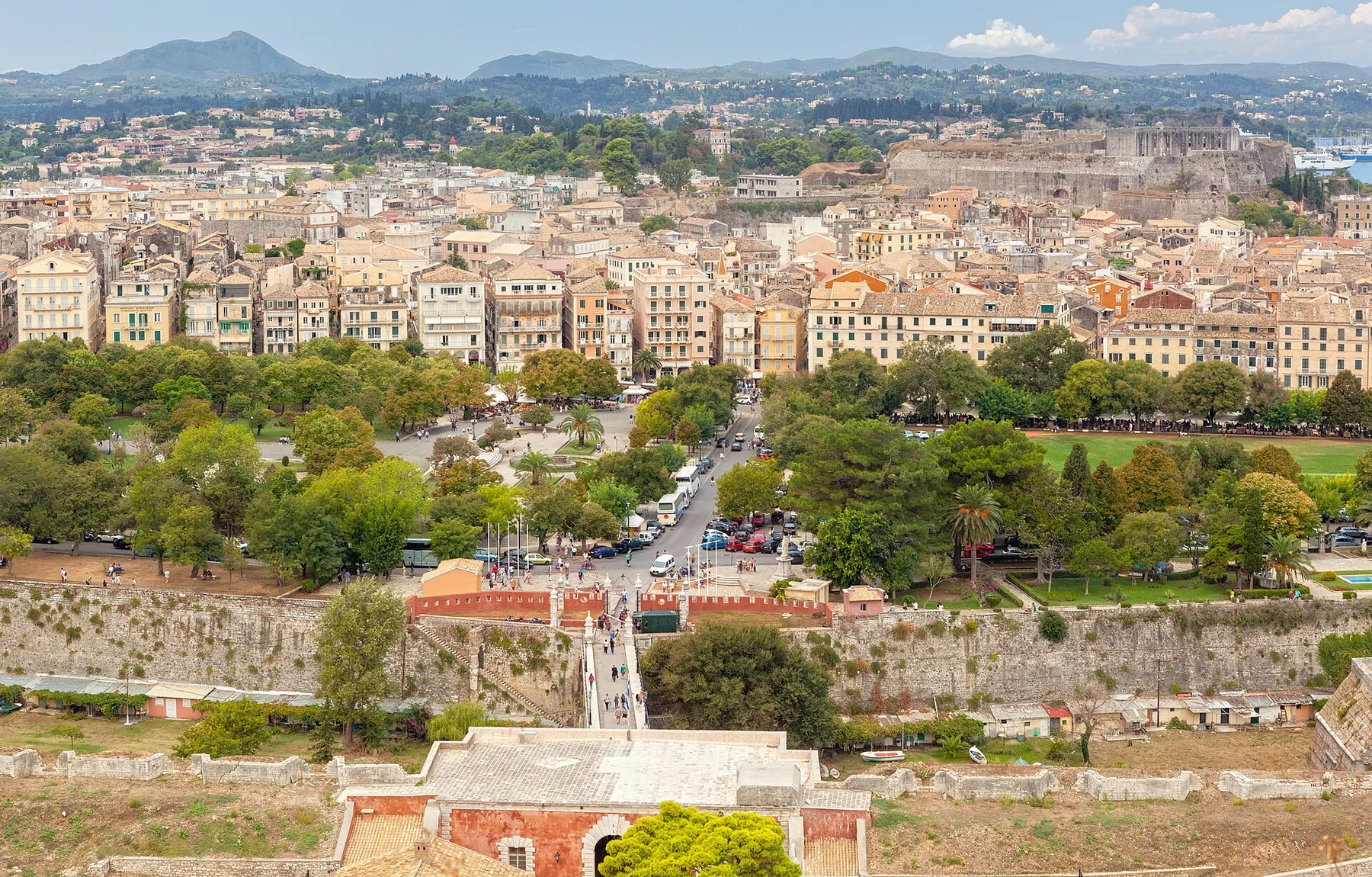
Begin with three nights in or close to the Old Town. On arrival day, walk the Liston and Spianada, then let the lanes establish the city’s scale. The point is not to mark every church and museum immediately. Corfu’s Venetian, French and British layers become clearer when the fortresses, arcades and civic buildings are seen as one urban story.
On the first full day, visit the Old Fortress near opening time, continue through the historic centre and choose one museum according to interest. The Museum of Asian Art offers a collection and a palace interior; the Archaeological Museum supplies the longer ancient context. Leave the afternoon loose for coffee, the harbour edge and a proper dinner. The Venetian Well is an occasion choice in Kremasti Square and should be reserved rather than treated as a spontaneous fallback.
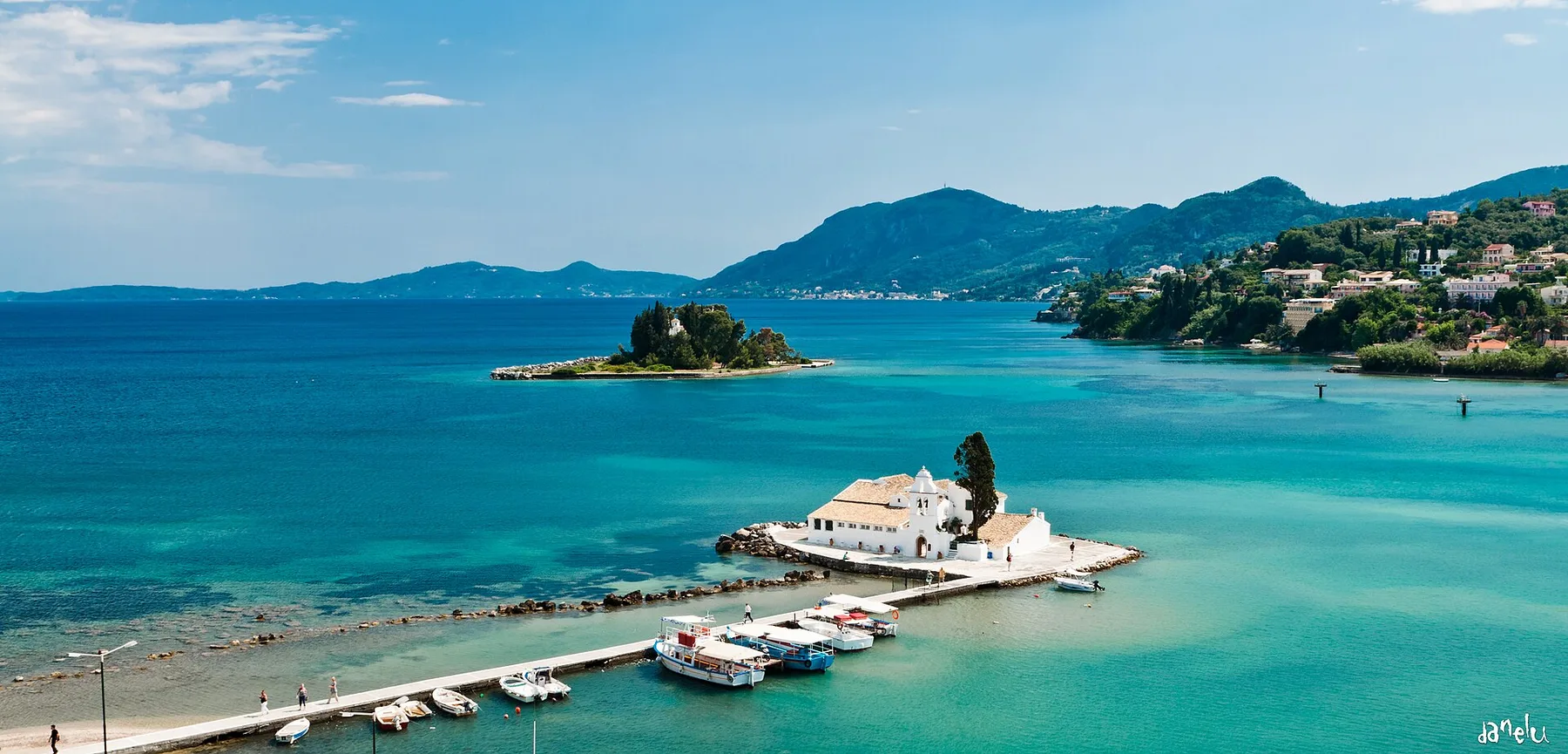
Use the second full day for the area south of town or a focused food-and-history walk. Kanoni and the view towards Vlacherna are easy to over-compress into a photograph; pair them with a garden, estate or swim where access is clear. If the trip includes a Sunday or festival, check how church services, processions and road closures change the day.
Days 4–5: Corfu beyond the capital
Collect the car and move to a second base. Northwest Corfu gives access to Paleokastritsa, mountain villages and high viewpoints; the northeast suits small coves and waterfront villages; the south feels flatter and less polished. Choose one area rather than trying to circle the entire island each day.
At Paleokastritsa, arrive before excursion traffic, see the monastery with appropriate dress and choose one cove for the swim. A local boat can reach smaller bays when conditions allow, but confirm the vessel, lifejackets, shade and duration. The following day, drive inland through olive country and stop in a village long enough for lunch or a walk. Corfu’s roads are narrow, parking in villages is limited and the last few kilometres often take longer than expected.
Travellers more interested in walking than beaches can exchange one coast day for a signed section of the Corfu Trail. Select a manageable section, arrange the return transfer in advance and carry more water than a city walk would require. Do not use an old trail description as proof that a gate, surface or bus link is unchanged.
Days 6–8: Paxos
Return the car and take the confirmed sailing to Paxos. Gaios is the most convenient first base, with the broadest choice of meals and services. Loggos is smaller and especially appealing in the evening; Lakka has a sheltered northern bay and is useful for boat hire. Pick one base for three nights rather than moving between villages that are only a road transfer apart.
Spend the first afternoon walking the harbour and settling into the island’s slower operating rhythm. On the full land day, link two villages and one east-coast cove, allowing time for the olive landscape between them. The west coast is higher, rougher and better approached through viewpoints or a qualified boat operator than through improvised cliff access.
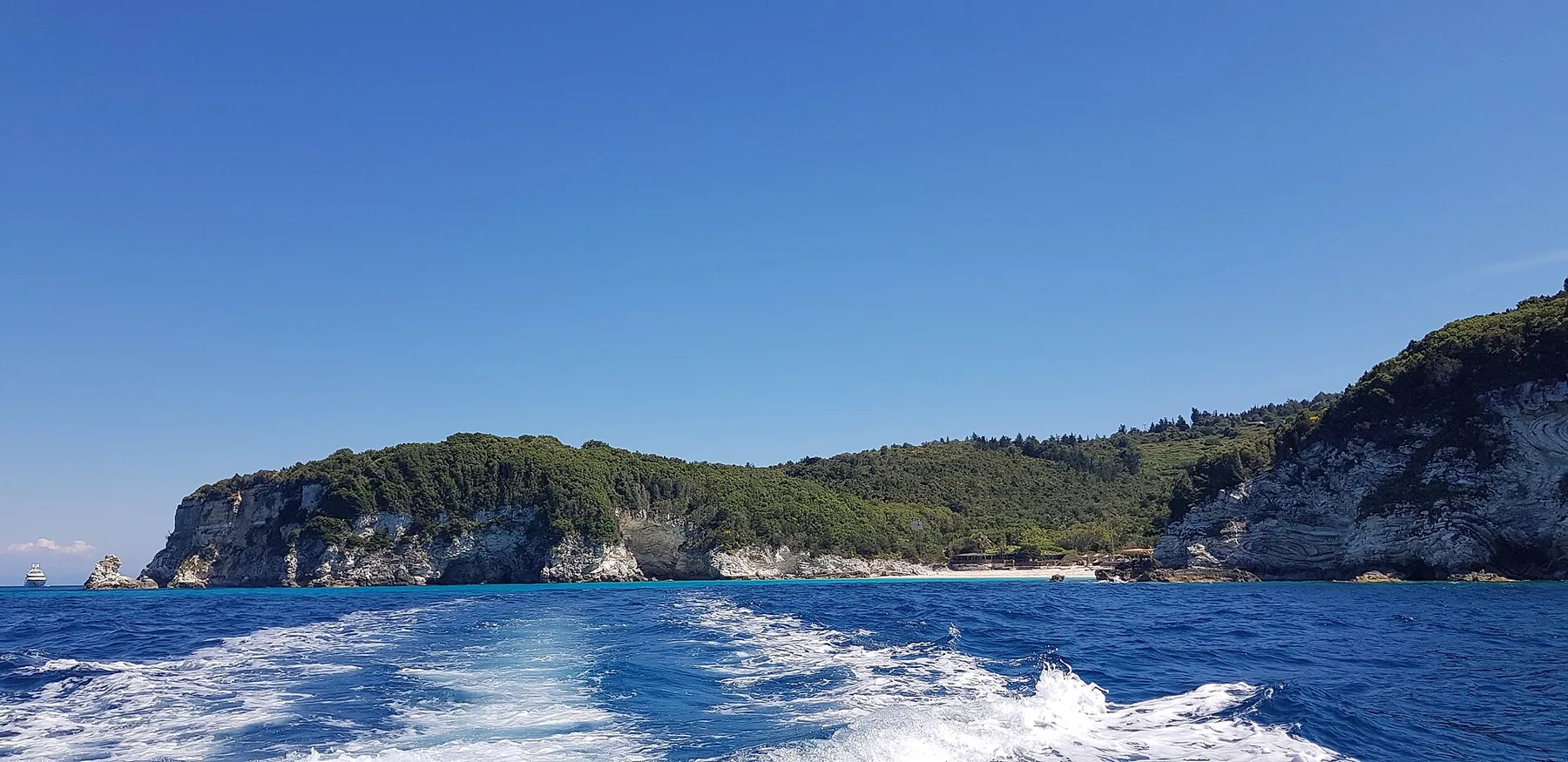
Keep one day for the water. A skipper-led circuit can include the west-coast caves and Antipaxos when the sea permits. If travelling independently, a day boat to Voutoumi is simpler, but confirm the time ashore and return port. Private rental boats require the right licence, a detailed handover and confidence with anchoring, weather and local exclusion zones. The operator’s permission does not replace personal competence.
Day 9: Return to Corfu
Take a morning or early afternoon ferry back to Corfu and sleep near the Old Town or airport. This buffer is not wasted time: it allows a final meal, shopping without luggage pressure and recovery from a delayed sailing. If the flight is late the same evening, only accept the connection when several later alternatives exist and the operator confirms the service.
What to reserve
- First: the return Paxos sailings and the final Corfu night.
- Next: an automatic rental car or child seats, a particular room outlook and one important Corfu Town dinner.
- Later: the Paxos boat day, once a reputable operator’s weather and cancellation policy is clear.
- Leave open: the exact Corfu cove and inland drive. Wind, heat and parking should shape those choices.
If you have only six nights
Stay entirely on Corfu, splitting the time between the Old Town and one rural coast. Paxos is possible as a day trip, but only when the sailing leaves useful time ashore. Do not force a two-night Paxos stay between two one-night Corfu airport stops; the check-ins would consume the contrast the route is meant to create.