
Kefalonia and Ithaca look close enough to treat as one destination, but they ask for different rhythms. Kefalonia is the largest Ionian island, with mountain roads, separate port towns and beaches spread across a long coast. Ithaca is smaller and quieter, yet its folded shoreline still makes road journeys slower than the map suggests. Ten days works when Kefalonia receives the longer share and the ferry ports—not a preferred hotel—decide the sequence.
Choose the ports before the hotels
Current networks can link Sami on Kefalonia with Pisaetos on Ithaca, while seasonal local routes may use other ports. Verify the exact service for the travel dates, including vehicle carriage, check-in time and arrival port. Fiskardo is visually close to northern Ithaca but is not automatically the useful departure point. If the route enters through Kefalonia airport and leaves from the same airport, return to Kefalonia for the final night.
A car is central to this itinerary. Reserve the appropriate size early, photograph existing damage and confirm whether the rental company permits the vehicle on the Ithaca ferry. Some agreements restrict inter-island travel. If the car cannot travel, arrange separate rentals and account for transfers at both ports before booking rooms.
Days 1–3: Southern and central Kefalonia
Arrive at Kefalonia airport and begin near Argostoli or the south coast. Argostoli is the practical base for markets, evening walks and access to several directions. Spend arrival day on the waterfront and in town rather than beginning with a cross-island drive. The following morning, visit a nearby beach and leave the hotter hours for lunch or a short museum stop.
Use one full day for the Robola wine landscape and Mount Ainos foothills. Book a winery visit rather than arriving during production work, designate the driver and ask about the local grape rather than treating the stop as generic tasting. Roads through the interior reward a slower pace, and livestock may be present. A mountain walk needs a current route, suitable shoes and a weather check; the summit is not a casual extension of a winery day.
Argostoli’s lagoon and marine life should be viewed without crowding or feeding animals. Choose operators that explain distance rules and local conservation. A sighting is never guaranteed and should not become a chase around the harbour.
Days 4–6: Northern Kefalonia
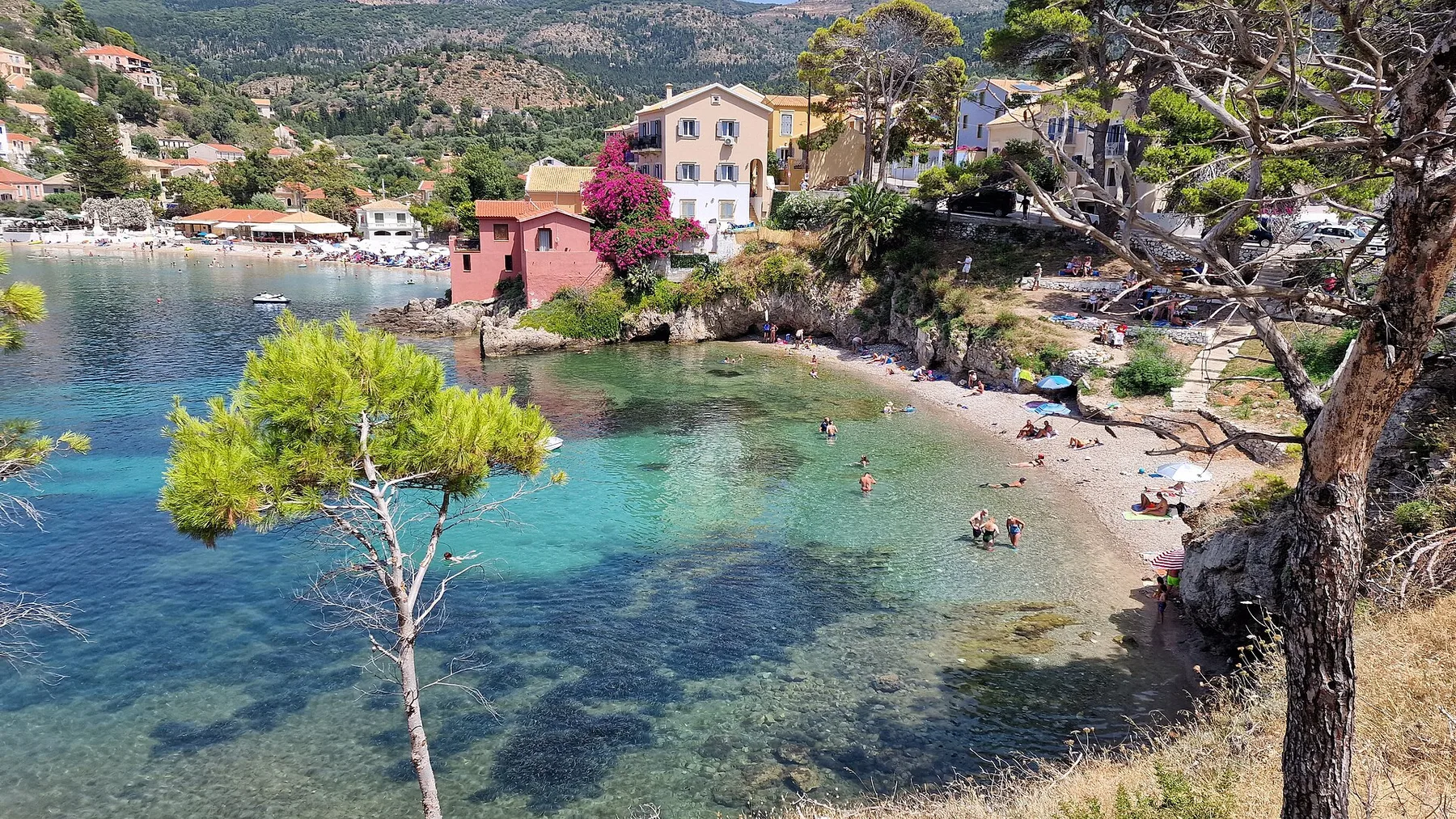
Move north, stopping at Myrtos Beach only when the sea state supports swimming. The road viewpoint and the beach are separate experiences; do not park across traffic for the photograph. Assos is worth time for the village and peninsula setting, though parking is constrained and the climb to the fortress can be hot.
Stay near Fiskardo for three nights if harbour evenings and access to the north matter, or near Agia Effimia if a more central road position is preferable. Fiskardo retained much of its older architectural character after the 1953 earthquake, and an early walk reveals more than the busy dinner hours. Tassia Restaurant is a longstanding harbour choice for Kefalonian cooking and seafood; ask about fish price and reserve the waterside setting in high season.
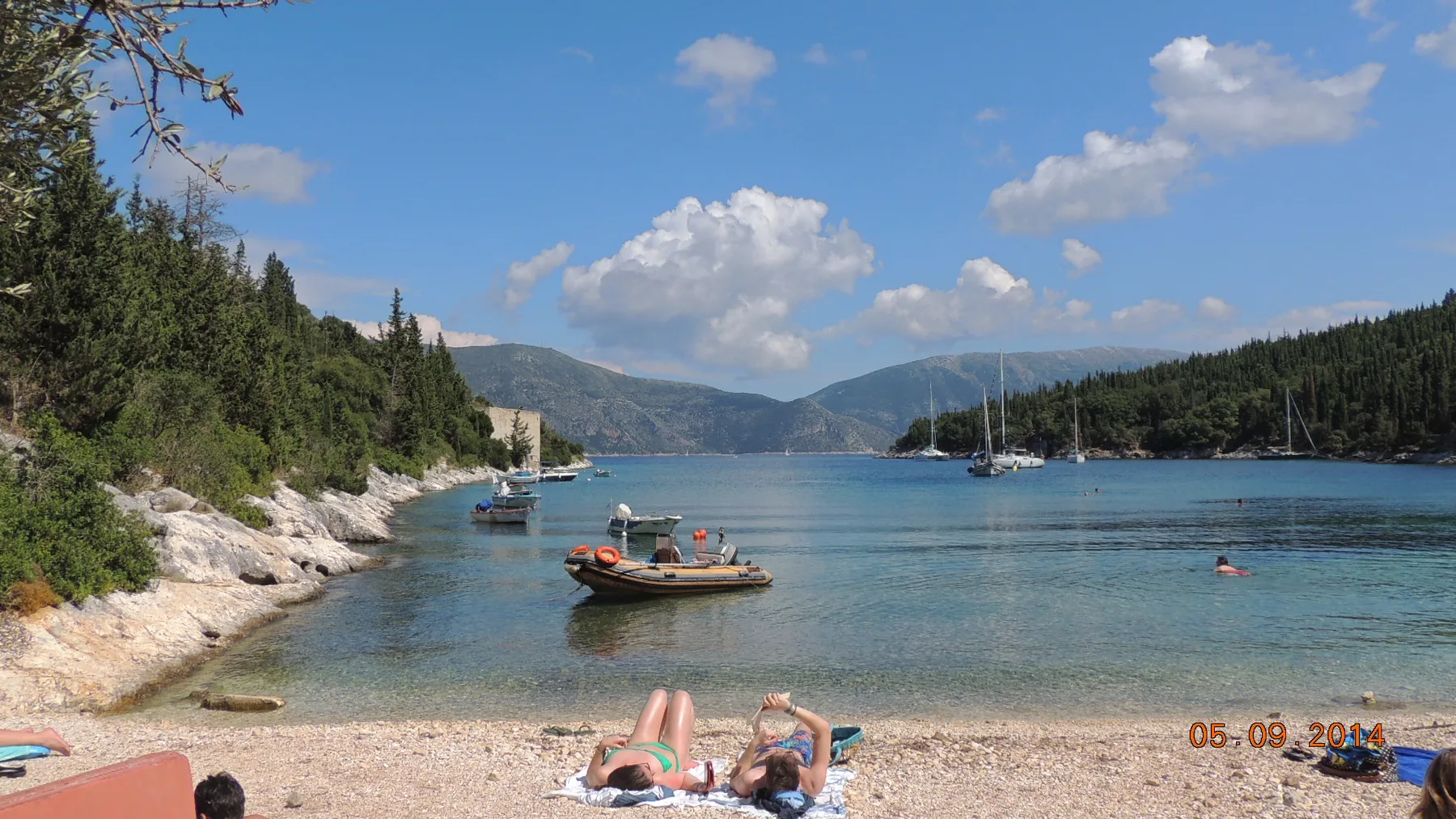
Dedicate one day to the east-coast caves or beaches, but avoid stacking Melissani, Drogarati and multiple distant coves into a single circuit. Cave access, boat queues and parking take time. Choose one principal natural site and one swim. A private boat day from Fiskardo can explore the channel towards Ithaca, provided the skipper is licensed and free to revise the route.
Days 7–9: Ithaca
Take the confirmed ferry and settle in Vathy for the broadest choice of services, or in the north if Frikes, Kioni and walking are the priority. Do not change bases for a three-night stay. On arrival, walk the harbour, learn the supermarket and fuel hours, then let dinner be the day’s only appointment.
Use the first full day for northern Ithaca. Frikes and Kioni are small enough to enjoy without a checklist; the drive and stops between them are the experience. Choose a nearby cove after asking about access and shade. Roads can be narrow with abrupt edges, so let local traffic pass and avoid parking in turning areas.
On the second day, explore around Vathy and the southern or central landscape. A walk linked to the island’s Homeric associations is most useful with a knowledgeable local guide who distinguishes archaeology, tradition and literary interpretation. Leave the afternoon for a swim or a café rather than forcing certainty onto sites that remain part of scholarly debate.
Day 10: Protect the departure
If flying from Kefalonia the following morning, return on day ten and sleep on Kefalonia. If the flight departs late, a same-day ferry may be possible, but only with substantial margin, alternative services and a rental arrangement that supports the port transfer. For travel onward to Patras or Astakos, verify that the selected Ithaca sailing operates on that date and identify the mainland arrival transport before leaving the island.
What to reserve, and what to keep flexible
- Reserve first: the Kefalonia–Ithaca ferry, an inter-island-approved rental car and the final pre-flight night.
- Reserve next: the preferred north Kefalonia base, one winery appointment and any private skipper with clear cancellation terms.
- Keep flexible: Myrtos, the boat day and the exact Ithaca cove. Swell, wind and heat should set the order.
- Carry: water, sun cover, shoes with grip and offline directions for roads with weak reception.
If you prefer one base on Kefalonia
Stay near Agia Effimia or Sami for six nights, accept longer drives to Fiskardo and the south, then spend three nights on Ithaca before one final Kefalonia night. The route loses the pleasure of walking home from dinner in two different Kefalonian towns, but it gains one fewer check-in and a simpler relationship with luggage.