
The mistake is treating Athens as a prologue
Athens is often allocated two dutiful nights before the ferry. That is enough to see the Acropolis and form the wrong conclusion: hot, loud, historically important, time to leave. Four days reveal a different city. Ancient monuments begin to orient rather than overwhelm. Apartment balconies, workshops and open-air cinemas turn the dense urban fabric into neighbourhoods. Dinner shifts later. A drink is no longer recovery from sightseeing but participation in a city that remains intensely social after dark.
The capital is neither a preserved classical stage nor a generic Mediterranean break. Ottoman traces, 19th-century nation building, refugee neighbourhoods, post-war apartment blocks and contemporary migration all sit on ancient ground. The practical way to experience that density is to plan one historical anchor each day and let a compact area supply the rest.
Give the Acropolis an honest morning
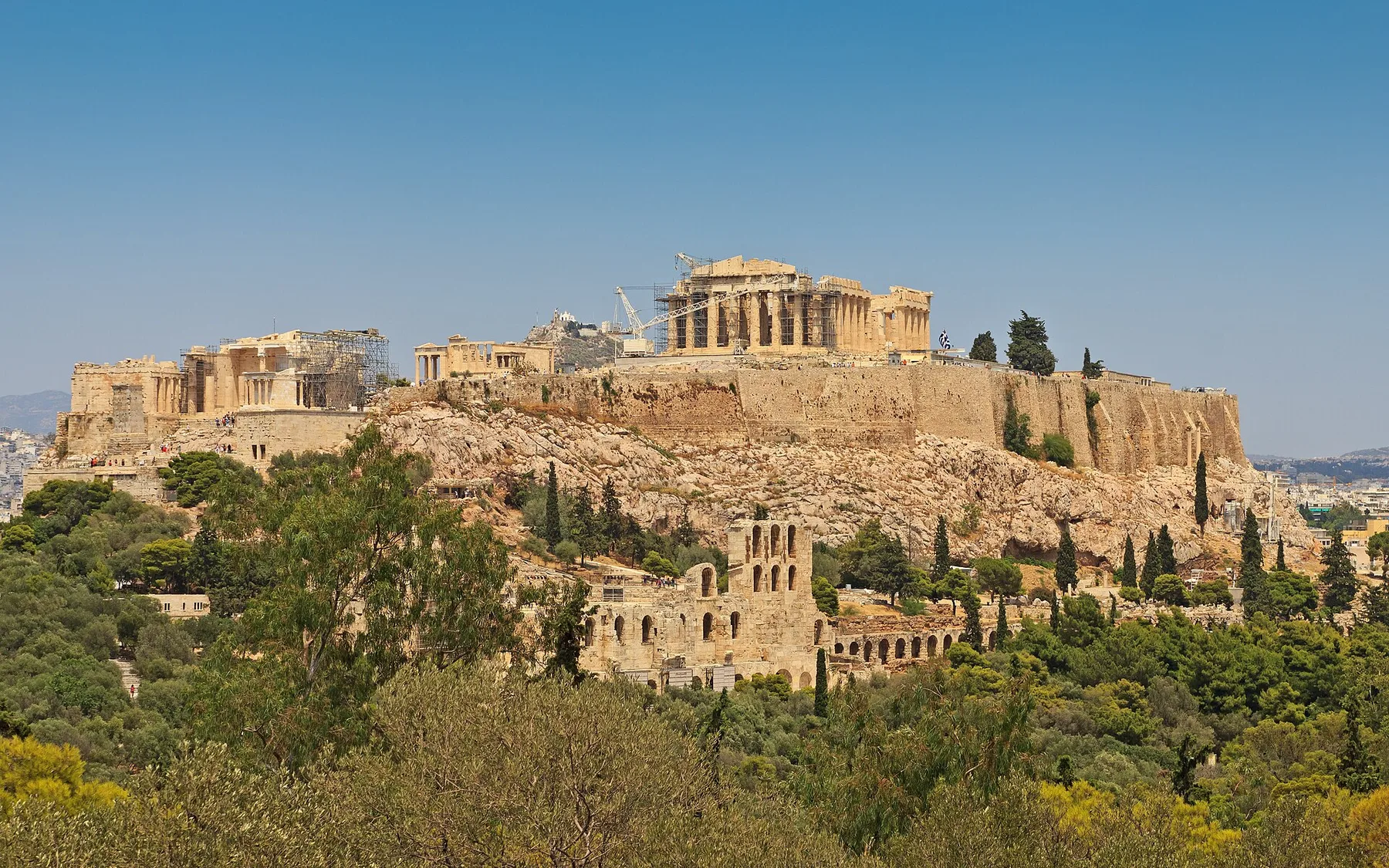
The Acropolis of Athens deserves its fame and suffers from the way fame organises visits. Reserve the official timed entry where required, go at the earliest sensible hour and check heat-related closures during extreme weather. Shoes need grip; the marble has been polished by millions of feet.
On the plateau, do not reduce the complex to a Parthenon photograph. Notice how the Propylaia stages arrival, how the Erechtheion responds to uneven sacred terrain and how the view connects Hymettus, Lycabettus, Piraeus and the modern basin. The monument makes more sense when you keep finding it between buildings for the rest of the trip.
Afterwards, choose either the museum or the surrounding streets, not both at sprint pace. The neighbourhoods south of the hill reward a long lunch and an aimless hour. A central stay such as The Dolli at Acropolis makes the ancient-modern relationship unusually immediate, but the view carries a premium; many travellers gain more from a quieter base and one rooftop visit.
Market Athens is a morning, not a photo stop
Approach Varvakios Central Market through the commercial streets around Athinas and Evripidou. The covered meat and fish halls are only one part of the district. Spice shops, nut roasters, cheese counters and stores selling practical kitchen goods extend the market into the surrounding blocks.
Keep out of working aisles, ask before making close portraits and wear shoes suited to wet floors. Then eat nearby. Diporto is an old basement cookshop with no interest in providing a conventional visitor experience. Go at lunch, ask what is ready and accept that it may be closed or sold out. The limited choice is not a gimmick; it is the operating model of a small kitchen. If the doors are shut, the district contains many other honest options.
Two quieter histories
On Mount Hymettus, the Kaisariani Monastery replaces traffic with cypress, pine and birdsong. The compact Byzantine complex and surrounding paths make a restorative half-day, particularly after rain or in the cooler months. Check official access and any forest restrictions before leaving; summer fire danger can change the plan. Link the visit to a short walk rather than arriving only to photograph the church.
Closer to the centre, the First Cemetery of Athens tells the story of the modern Greek state through sculpture and memorial architecture. It is a working cemetery first and an open-air collection second. A municipal guided walk, when scheduled, provides the best context. At other times, move quietly, stay away from active funerals and look at how neoclassical ideals were translated into personal grief and public memory.
Neighbourhoods are useful only when they are not trophies
It is tempting to describe each Athenian district with a single adjective: rebellious Exarchia, elegant Kolonaki, hip Pangrati. Reality changes by street and hour. Use neighbourhood names to reduce travel, not to collect identities. Spend a morning around the market, an afternoon south of the Acropolis, an evening in a residential district where dinner and a cinema are walkable.
Pangrati and Mets work well together: steep streets, modern apartment architecture, small bars and the cemetery’s wooded edge. Kypseli reveals a more diverse and densely inhabited Athens, especially around its pedestrian spine and municipal market. Exarchia deserves attention to bookshops, political history and present-day residents, not disaster tourism or a search for graffiti backdrops.
The city after dark is part of the guide
Athens has one of Europe’s strongest cocktail cultures, but the best night need not become a bar crawl. Start at Baba au Rum, where a deep rum list and accomplished drinks come without excessive ceremony. Visit early for a seat and a conversation about the menu; later hours are louder and more compressed.
Then eat. Athenians dine late, especially in summer, and sharing is the natural grammar of the table. Order fewer dishes initially, ask what is seasonal and leave room for fruit, yoghurt or something sweet. The restaurant scene ranges from old cookshops to highly technical kitchens; a good itinerary includes both without pretending one is more “real” than the other.
A four-day framework
- Ancient city: early Acropolis, one museum, long lunch and an evening walk when the hill is illuminated.
- Market and modern centre: Varvakios in the morning, the commercial triangle on foot, lunch nearby and cocktails after a rest.
- Green and Byzantine: Kaisariani with a short Hymettus walk, then dinner in one neighbourhood rather than crossing the whole basin.
- Modern memory: the First Cemetery, Pangrati or Mets, a contemporary museum or gallery, and an open-air cinema in season.
Practical Athens
- Transport: metro for long jumps, walking for understanding, taxis for late or awkward cross-city trips. Validate the correct fare medium and protect valuables in crowded vehicles.
- Heat: move outdoor archaeology to the morning, rest in the afternoon and never assume published access survives an extreme-heat order.
- Traffic: pedestrian priority is inconsistent. Look both ways even on one-way streets and treat painted crossings cautiously.
- Time: three full days introduce the city; five allow museums, food and neighbourhoods to coexist.
- Departure: do not schedule a tight airport or port transfer after a long dinner. Athens traffic and ferry logistics both punish optimism.
Athens rewards the visitor who stops asking where antiquity ends and ordinary life begins. The layers are the city: marble above a market lunch, Byzantine shade beyond apartment blocks, a serious cocktail after a cemetery of neoclassical angels.