
Tinos asks you to look at how things were made
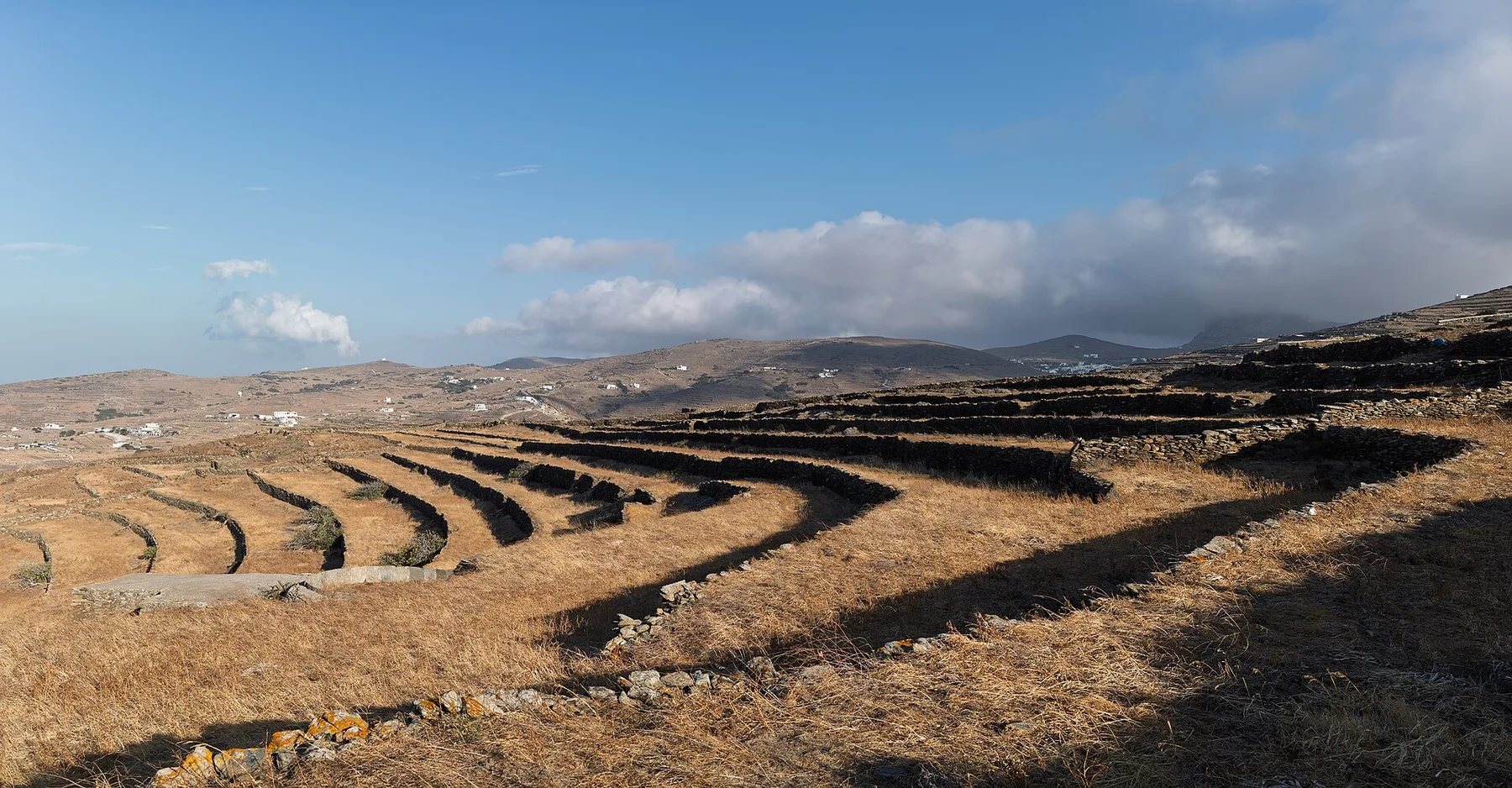
The island’s first impression can be misleading. Tinos Town is a busy pilgrimage port, its main avenue aligned with one of Greece’s most important churches. Beyond it, the land opens into terraces, granite ridges and dozens of villages whose marble lintels, fountains and dovecotes carry an extraordinary density of craft.
Tinos is not a beach holiday with a few villages attached. Wind may choose the coast for you, while the interior can sustain whole days. Rent the smallest practical car, plan by geographic cluster and walk whenever heat allows. Four nights provide an introduction; six let weather and appointments shape the order.
Understand the pilgrimage before leaving town
The road rising from the port is part of a living national pilgrimage, especially around major feast days. Approach it with respect. People may be fulfilling vows on their knees; spectatorship and intrusive photography are inappropriate. Inside religious spaces, follow dress and photography guidance and give worship priority.
The town also functions as a real port and administrative centre. Do not judge the whole island from its arrival traffic. Stay for a meal, visit the older lanes and observe how pilgrimage shops, ferry schedules and daily life coexist before driving north or inland.
Pyrgos is the place to learn marble
Begin at the Museum of Marble Crafts. Quarry material, tools, drawings and recordings explain the full chain from extraction to carving. The collection is unusually good at showing craft as an economy and social system rather than a row of beautiful objects.
Then walk Pyrgos. Marble frames doors, carries water, marks graves and shapes the village square. Visit the Giannoulis Chalepas House Museum for a more intimate story: a major modern sculptor’s difficult life, long silence and remarkable late work told inside his family home. The contrast between institutional craft history and one artist’s room is the reason to see both.
Do not rush immediately to the coast. Sit beneath the square’s plane tree, look at the cemetery’s carving from an appropriate distance and allow the village to become more than a shopping stop.
Granite gives Volax its own visual language
The Volax Boulder Landscape appears almost theatrical: rounded granite blocks scattered across fields around a compact white village. Its distinctiveness has generated myths, but geology and weather are compelling enough. Walk the established paths in early or late light and keep out of cultivated land.
Volax also retains a basket-making tradition. Seek out active makers, ask before photographing and buy only if the object has use and meaning for you. The village is not an open-air craft display; it is a small community managing intense seasonal attention.
Dovecotes turn agricultural architecture into ornament
Across Tinos, ornate stone dovecotes rise from terraced valleys. Their geometric façades created nesting openings while displaying the skill and status of their owners. The Tarambados Dovecotes Trail is a rewarding place to understand them within the wider system of paths, fields and walls.
Use current route information, close gates and never climb into a private structure. A telephoto lens is more respectful than crossing a planted field. The value lies in the pattern of human land use, not in finding one structure that can be labelled the island’s best.
Wine as landscape, not lifestyle branding
At Volacus Winery, vines grow among granite near Falatados. The small estate makes the relationship between wind, poor soil and renewed Tinian wine culture unusually clear. Visits are by prior arrangement on limited seasonal days. Contact the winery early, confirm exactly what is offered and arrange a driver.
Elsewhere, eat according to place: artichokes and preserved foods in the interior, fish where a harbour actually supports fishing, local cheese and louza when a producer can be named. Avoid turning “local” into a vague promise. Ask where an ingredient comes from and accept when the honest answer is another island or the mainland.
The coast follows the wind
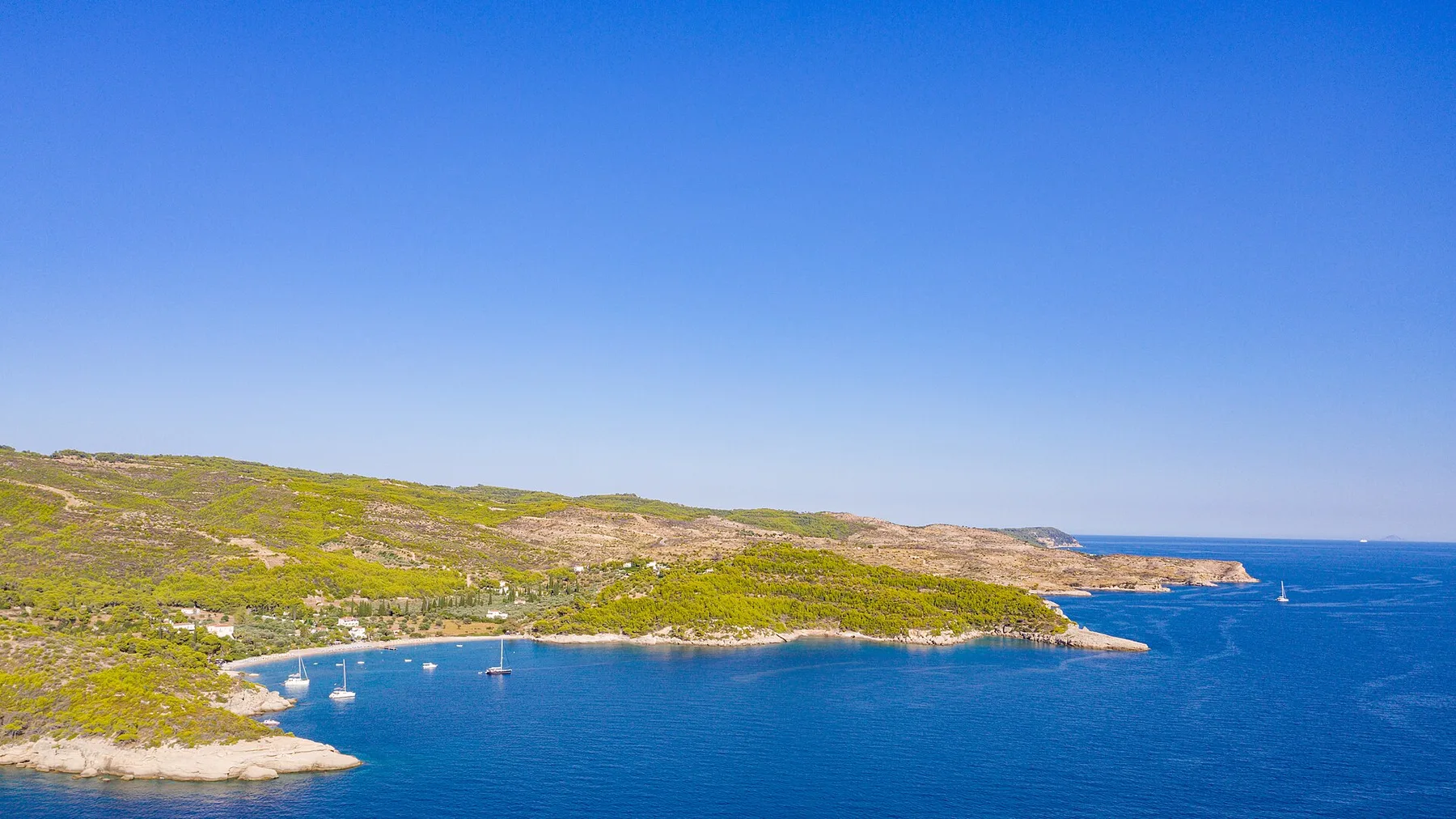
Tinos is exposed to the meltemi. A beach recommendation without a wind direction is nearly useless. Ask locally which coast is sheltered that morning, and resist driving the entire island in search of flat water. Organised beaches provide shade and facilities; less developed coves require everything you need and a commitment to take it away.
Swimming near the town can be practical on arrival or departure days. More distant beaches belong in the same geographic cluster as a village visit. This simple rule reduces fuel, parking conflict and the feeling that the island is a set of disconnected stops.
A five-day route
- Tinos Town: pilgrimage culture, port life and a low-key first evening.
- Marble north: Pyrgos, both museums and time in the square; add the nearby coast only if the day remains calm.
- Granite interior: Volax, Falatados and a pre-arranged winery visit.
- Dovecote valleys: a morning walk, one or two villages and an afternoon swim chosen by wind.
- Open coast day: return to a favourite landscape, hike with a guide or stay close to town before the ferry.
Travel with the island rather than over it
- Book craft, winery and museum visits directly; smaller places may not keep continuous hours.
- Do not park in village turns, across gates or on fragile road edges.
- Carry walking shoes. Marble paving and rough paths make fashion sandals a poor default.
- Respect pilgrimage, funerals and religious festivals as community events first.
- Allow a ferry buffer in high wind and keep the final day geographically simple.
Tinos is at its most beautiful when beauty can be traced to labour: a carved fountain, a wall that holds a field, a basket made from local reeds, a vine surviving between granite and wind.