
The island makes more sense after the last day boat leaves
Spetses is close enough to the mainland to tempt a hurried visit: hydrofoil in, coffee at Dapia, horse carriage, hydrofoil out. That version catches the handsome surface and misses the island’s rhythm. Stay two or three nights and the distances begin to work differently. The waterfront is no longer one promenade but a sequence of neighbourhoods; the pine-covered interior becomes part of the day; the Old Harbour reveals working boatyards beside its polished tables.
The absence of private cars for most visitors is not a quaint footnote. It changes how the island is heard and measured. People move by foot, bicycle, scooter, water taxi and the occasional carriage. A beach that looks close on a map may involve a hot ride; a dinner across town becomes a twenty-minute walk under pines. Plan around that slower geography and Spetses feels generous rather than inconvenient.
Begin with the captains, not the beach clubs
The island’s wealth and architecture grew from the sea. Spetsiot captains and shipowners played a decisive role in the Greek War of Independence, and the clearest introduction is the Bouboulina Museum. Because the collection remains inside Laskarina Bouboulina’s family house, the story connects national history with money, risk and domestic life. Take the guided visit early in your stay; afterwards, the pebble courtyards and high-walled mansions around town stop looking like anonymous scenery.
Walk east from Dapia and the present-day harbour gradually gives way to Baltiza, the Old Harbour. Traditional wooden boatbuilding has not vanished completely. Look into open yards from a respectful distance, keep clear of active work and notice the hulls taking shape beside leisure craft. Continue towards the Spetses Lighthouse and Natalia Mela sculpture. The lighthouse may not be open, but the headland walk gathers the island’s working maritime edge, modern art and an uncluttered Saronic horizon in one quiet hour.
A three-day shape that leaves room to improvise
Day one: Dapia to the Old Harbour
Arrive, leave the luggage and resist booking transport immediately. Walk the waterfront east, detouring through the lanes behind Agios Nikolaos. Visit Bouboulina’s house if the tour schedule fits, then continue to the Old Harbour in the cooler late afternoon. Dinner at Mourayo works well here: the former munitions store has been part of Spetses evenings for decades, and the setting is strongest when the harbour changes from boatyard to night-time gathering place.
Day two: choose one coast, not every beach
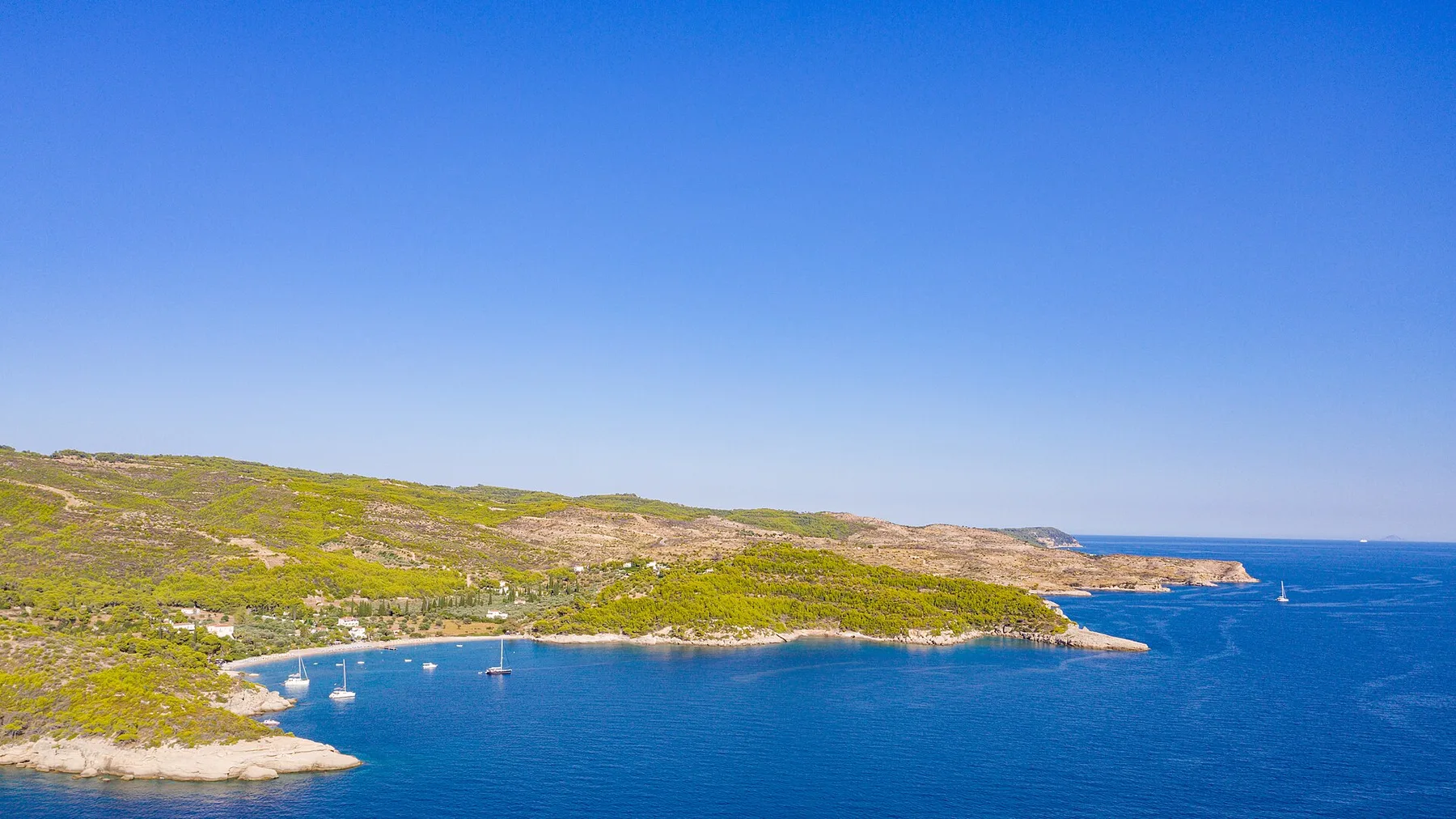
The island road makes a broad circuit, but trying to collect every cove turns a car-free island into a transport exercise. Choose a direction according to the wind. On a calm day, arrange a water taxi to a more distant beach and return by a planned pickup. If cycling, start early, take more water than feels necessary and remember that the interior rises sharply. Ask locally about road condition and traffic before committing to the full loop.
For a quieter cultural counterpoint, investigate whether the Anargyrios and Korgialenios School has a tour, performance or public programme during your dates. The early-20th-century campus and open-air theatre reveal an ambitious educational history almost absent from standard island itineraries. Access is event-led, so this is an appointment to research, not a gate to assume will be open.
Day three: Kounoupitsa and an unhurried departure
Walk west from Dapia through Kounoupitsa, where swimming platforms, houses and small places to eat replace the monumental harbour frontage. The point is not a major attraction. It is seeing ordinary island life close to the water and understanding how quickly Spetses Town changes character. Have a swim if conditions allow, return for a late breakfast and leave buffer before the hydrofoil; wind and port changes deserve respect.
The offbeat Spetses is often institutional, not secret
The promise of a secret discovery is tired on an island whose visitors share the same narrow coast road. Better discoveries come from changing the subject. Look at philanthropy at the school campus. Study the carved ceilings and financial power behind a revolutionary household. Watch a caulker at work without turning the boatyard into a photo set. Walk to the lighthouse when everyone else is positioning for a harbour sunset.
Another way to find space is to travel outside the peak. Late spring brings green hillsides and comfortable riding; September keeps the sea warm while loosening the August pressure. Winter has its own local life but far fewer visitor services. Do not expect a summer timetable in another season—confirm museums, boats and restaurants individually.
Where to stay and how to choose
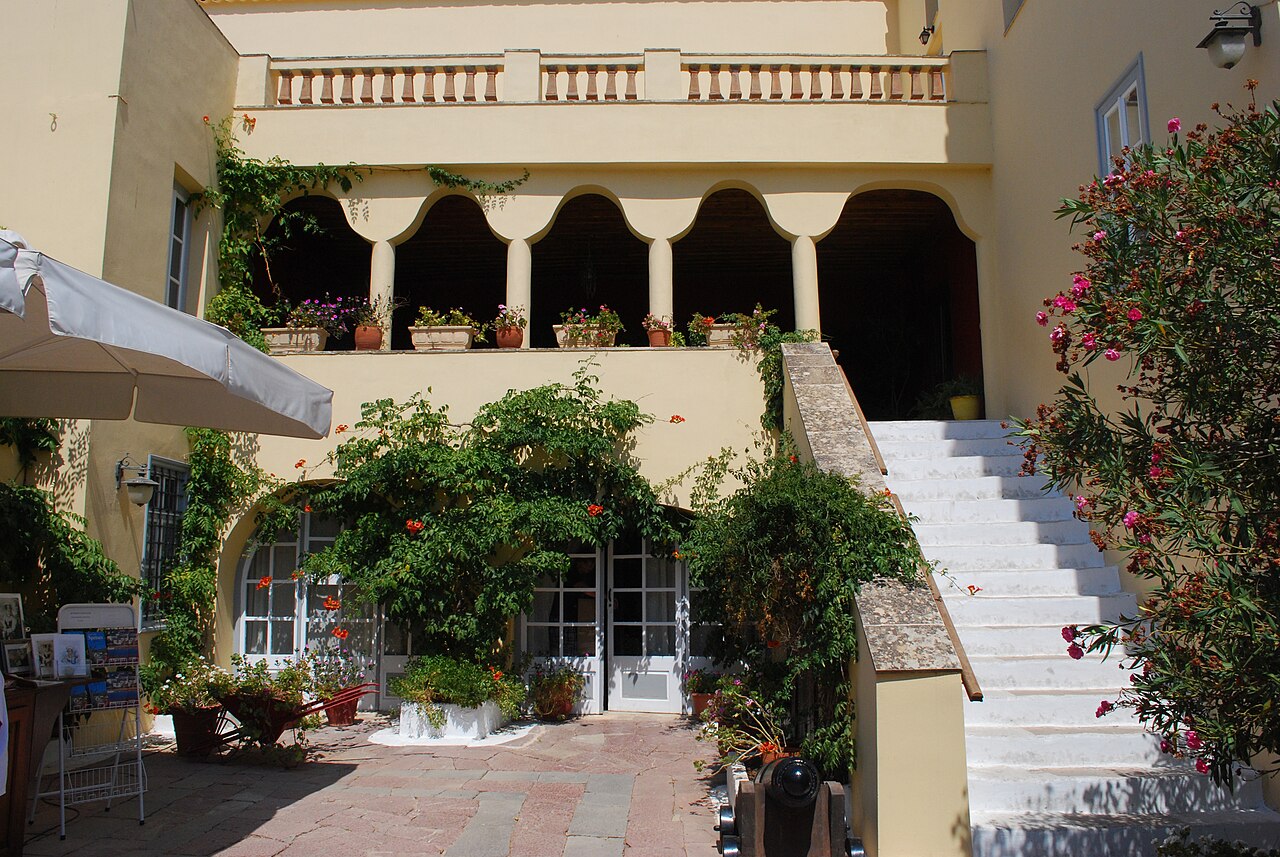
For a first visit, the harbour area removes friction. The historic Poseidonion Grand Hotel faces Dapia and places boats, evening walks and town museums almost at the door. Its value is not only grandeur; it lets a car-free itinerary work elegantly. Travellers seeking greater privacy can look farther along the coast, but should calculate every dinner transfer and water-taxi return before booking.
Do not choose a remote room solely from a sea-view photograph. Ask whether the property is reachable on foot with luggage, whether the last approach has steps, and how late transport operates on your dates. On Spetses, location is a daily experience rather than a map detail.
Practical judgement
- Stay: two nights for town and one coast day; three or four if you want a full island circuit without rushing.
- Move: walk in town, use water taxis selectively and rent a bicycle or scooter only if you are comfortable with hills, heat and local traffic.
- Reserve: hydrofoils and important dinners in high season; reconfirm boat departures after strong-wind forecasts.
- Respect: boatyards are workplaces, chapels are living religious spaces and quiet lanes are people’s homes.
- Pack: grippy shoes, a refillable bottle and a light layer for fast evening boats.
Spetses does not require an exhaustive list. It rewards returning to the same harbour at different hours, learning why the island built ships and schools, and letting one long coastal journey define the day.
.jpg)