

Sifnos makes most sense when you stop treating its food, villages, pottery and paths as separate attractions. The chickpea stew arrives in a clay pot because both the recipe and the vessel belong here. A lane leaving Artemonas becomes an old route across terraced country. The beach at the end may sit beside a potter's workshop, and dinner sends you back up the hill. The pleasure is in those connections.
This is not an island where one famous beach settles the itinerary. It rewards four or five days, a base chosen with care and a willingness to move slowly. Apollonia brings restaurants and evening life; Artemonas is quieter and more architectural; Kastro faces the open Aegean; Faros and Vathi put the sea first. Each produces a different holiday, even though no drive is especially long.
The quick decision
- First visit without a car: Apollonia or Artemonas, using buses for the beaches.
- Food and evenings on foot: Apollonia, provided you accept late-night noise near the main lane.
- Quiet, views and walking: Artemonas or the Poulati hillside.
- Beach with children: Platys Gialos or sheltered Vathi.
- Couples wanting a small coastal village: Faros.
- One memorable night: Kastro, though luggage and parking require thought.
- Best balance: three nights in the central villages and two beside the sea.
Apollonia: the useful, sociable centre
Apollonia sits near the centre of the island's road and bus network. That practical fact matters. It lets a car-free traveller spend the morning at a beach, return for a rest and walk out to dinner without solving a taxi journey. The Steno, its pedestrian main lane, gathers shops, bakeries, restaurants and bars into a compact evening circuit. Cosi is one of the local listings to consider for a drink, but the larger advantage is choice: if one place is full, the next option is usually close.
The compromise is that central does not mean calm. Rooms directly on the Steno can hear people well after dinner, and properties advertised as “Apollonia” may lie down a steep lane or in a neighbouring settlement. There is no beach in town. In July and August, the final bus home and the demand for taxis deserve checking before an evening elsewhere.
Choose Apollonia for a first trip, a short stay, solo travel or anyone who dislikes driving after dinner. It is less convincing for families whose day revolves around repeated trips to the sand, or for travellers imagining silence outside the window.
Artemonas: handsome houses and slower mornings
Artemonas is close enough to Apollonia to share its conveniences but has a gentler rhythm. Neoclassical houses, walled gardens, churches and old confectioners give a walk through the village a purpose beyond shopping. Its lanes are best early, when deliveries and visitors have not yet tightened the narrow streets. The route between the central settlements also makes it possible to walk to dinner rather than move the car for every meal.
The village spreads over slopes. A pin on a booking map can conceal steps, and the last walk home may feel longer than it looked at noon. Ask where a taxi can actually stop and whether the room lies above or below the main road. Families with pushchairs and travellers with reduced mobility should request a precise access description.
Above Poulati, Verina Astra turns the eastern horizon into the reason to stay. It suits couples and walkers who value sunrise, quiet and a serious hotel restaurant more than walking to a beach. It is near Artemonas in island terms, not at the centre of village life: a car or planned transfers make the stay easier.
Kastro: history, wind and the east-facing sea
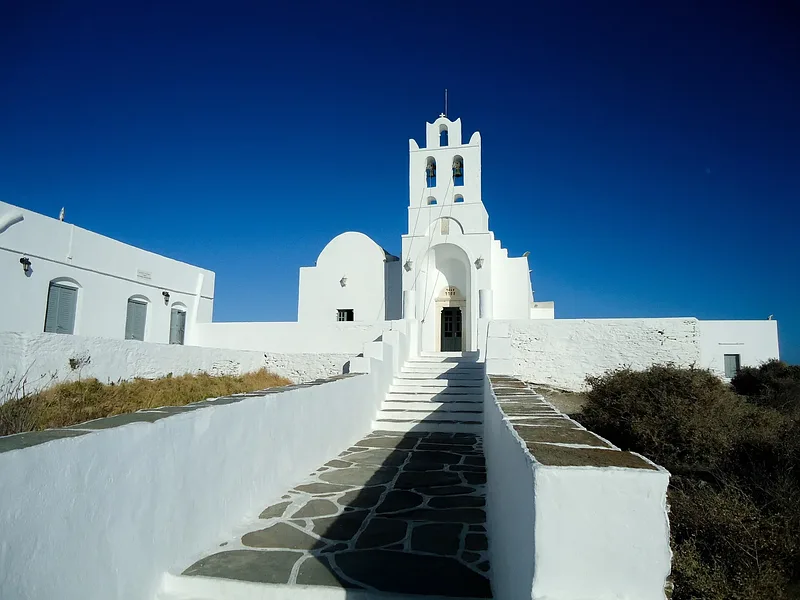
Kastro is the old fortified capital, built as a tight settlement on a rocky eastern height. Ancient fragments appear in later walls; alleys pass beneath upper rooms; the path towards the church of the Seven Martyrs drops into one of Sifnos's defining views. Come in the morning or late afternoon, take the side lanes and allow more time than the village's size suggests.
Staying here is atmospheric but not effortless. Cars remain outside the historic core, luggage may cross stone lanes and steps, and the exposed side of the island can be windy. Restaurant choice is small compared with Apollonia. For an able walker on a second visit, that isolation can be the point. For a family managing beach equipment twice daily, it may become unnecessary work.
Faros and Chrysopigi: the coast for walkers
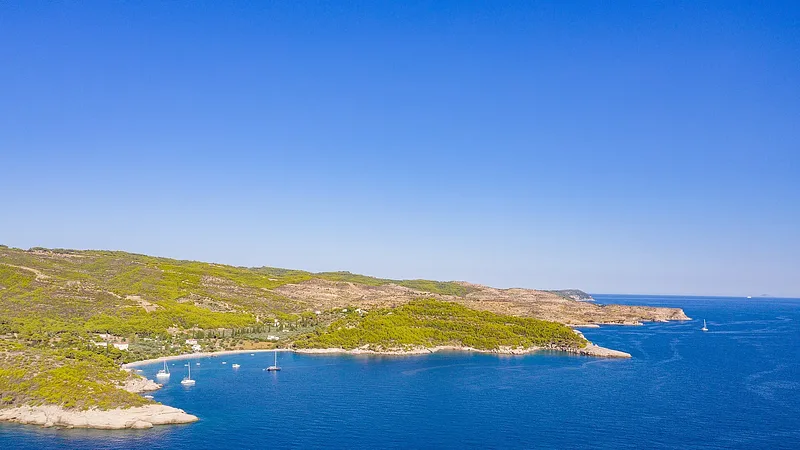
Faros is a former fishing harbour with a few small beaches and a compact group of places to eat. Its particular advantage is connection: coastal footpaths lead towards Glyfo and onward to Chrysopigi, turning a swim into a short, beautiful outing rather than a drive. Nearby Apokofto Beach, across the narrow bay from the monastery, is one of the easiest places to understand why the south-east coast works so well for a mixed walking-and-swimming day.
NÓS Hotel & Villas sits above the Faros area and is a good match for food-minded couples who want a composed hotel, spa time and access to the coast. Faros itself has fewer shops and late choices than the central villages. Without a car, check the seasonal bus timetable before assuming every evening in Apollonia will be simple.
Platys Gialos: the easiest full beach base
Platys Gialos has the island's most complete beach-village infrastructure: a long sandy bay, accommodation, tavernas and useful everyday services. Families can reduce logistics by staying within walking distance of the water. Couples who want to swim before breakfast and dine in sandals will also appreciate it.
It is busier and more developed than Faros or Vathi, especially around the organised sections of beach. It also creates distance from the central villages, so the decision is between effortless beach days and effortless evenings in Apollonia. Pottery is part of the area rather than a themed diversion: workshops near the south coast continue a craft once positioned by access to clay, fuel, water and sea transport.
Vathi: a bay that asks you to stay put
Vathi Beach curves around a deeply sheltered bay. Shallow entries and reduced exposure to the north wind can make it a reassuring family choice, although no beach is calm in every condition. The settlement is linear: distances along the sand matter when carrying bags or accompanying small children.
Elies Resorts is the full-service version of Vathi, spreading through an olive grove with pools, family accommodation and the beach below. It works for a multigenerational holiday or travellers who genuinely want resort days. Staying in Vathi while planning nightly dinners across the island is a mismatch; the bay is at its best when you let it narrow the agenda.
The pottery is useful, not merely decorative
Sifnian pottery developed from material and necessity. Local refractory clay, rainwater, fuel and generations of skill supported workshops that produced cooking and storage vessels. When coastal trade became safer, many potteries moved from inland locations towards places such as Kamares, Vathi and Platys Gialos. That geography is still visible.
The most revealing object is the mastelo, the broad clay vessel that shares its name with the island's slow-cooked meat dish. The skepastaria used for revithada, a chickpea stew baked slowly, makes the same point: these are forms shaped by kitchens. When visiting a workshop, ask what a piece is made to do, whether it is food-safe and how it should be heated. Buying directly supports a working craft, but a respectful visit is not an entitlement to interrupt production or photograph people without asking.
What to eat, and how to order well
Revithada is associated with Sunday because it was traditionally left to cook overnight; mastelo is especially connected with Easter. Restaurants may serve both more widely in the visitor season, but availability should not be treated as a performance scheduled on demand. Chickpea fritters, caper preparations, local cheeses, honey sweets and almond biscuits are easier to encounter casually.
The best way to eat on Sifnos is to vary the setting. Have one considered hotel dinner, one village meal, one long lunch beside the water and breakfast from a bakery. Ask what is seasonal before ordering a checklist of famous dishes. Reserve important dinners in high summer, then leave room for the unplanned taverna whose short menu reflects what was bought that morning.
Walking the island without turning it into an endurance test
Sifnos has 19 officially marked trails. They reuse the old network between villages, chapels, fields, mines and coast, so a walk often explains the island better than a scenic loop designed only for exercise. Useful combinations include the central villages with Kastro, Artemonas with the east coast, and Faros with Chrysopigi.
Distance is only one measure. Shade is limited, stone can be polished or loose, and a route with a moderate kilometre count may include sustained climbing. In summer, start early, carry more water than seems necessary and avoid committing to an exposed return in the middle of the day. Download the official route information before leaving mobile coverage. Closed gates, erosion and weather can change conditions; markings do not remove the need for judgement.
Car, bus or a split approach?
A car is helpful, not compulsory. The seasonal bus network connects Kamares, the central villages and principal beaches, making a central base viable without driving. The limitation is frequency: a day assembled around several small stops may waste time waiting. Taxis fill gaps but become scarce when ferries arrive or dinner finishes.
Hiring a car for only two days is often the sensible compromise. Use it for Vathi, the north and less direct trailheads; use buses and feet around Apollonia, Artemonas and Kastro. Roads are paved but narrow, parking is outside many settlements and confidence matters more than speed. Do not take a vehicle into a lane merely because a navigation app draws a line through it.
A five-day route that leaves room to breathe
- Day one: arrive through Kamares, settle into the central villages and walk between Apollonia and Artemonas.
- Day two: walk to or around Kastro, then return for a long village dinner.
- Day three: follow the Faros–Chrysopigi coast, swim at Apokofto and stay for lunch.
- Day four: choose Platys Gialos for activity or Vathi for a slower bay day; visit a pottery workshop by prior arrangement where appropriate.
- Day five: take a shorter morning trail or revisit the village you rushed, then allow generous time for the ferry.
With three days, keep one base and choose either Kastro or a longer coastal day, not both. With a week, split between Artemonas or Apollonia and Faros or Vathi. The extra time should not become seven scheduled highlights. Sifnos is unusually good at making an empty afternoon feel like the main event.