

Naxos is large enough for the place you sleep to shape the trip. A room in Chora puts the ferry, old town and evening bars within a walk. Agios Prokopios and Agia Anna make swimming easy without giving up the bus. Plaka creates space and long beach days. An interior village trades the sea outside the door for cooler evenings, local life and quick access to mountain walks.
None is the universal best base. The useful question is what you want to do before breakfast and after dinner, then whether you are willing to drive between those two answers. On a first visit of five nights, Naxos Town or the near west coast is usually right. With a week, splitting town and beach—or beach and mountains—lets the island change character without turning each day into a commute.
The answer in one minute
- First visit without a car: Naxos Town.
- Family beach plus frequent buses: Agios Prokopios or Agia Anna.
- Long, quieter beach days: Plaka.
- Windsurfing or kitesurfing: Mikri Vigla, after checking the right side of the headland for your sport and skill.
- Food, bars and ferry convenience: Naxos Town.
- Walking and village life: Chalki, Filoti or Apiranthos, with a car.
- Seven nights: four on the west coast and three in town or the interior.
Naxos Town: the lowest-friction base
Chora wraps several different environments together: the ferry port, waterfront promenade, commercial centre, Venetian Kastro, old market lanes and Agios Georgios beach. That variety is its strength. You can arrive without a transfer, eat somewhere different each night and take a bus or rental car out during the day.
Hotel Grotta sits on the northern rise with Portara views, heartfelt family service and a short but real climb home. Nissaki Beach Hotel is the convenient answer for travellers who want town and sand together at Agios Georgios. Adriani Hotel offers a smaller family-run stay between the port and the Grotta area, while Xenia Hotel places practicality in the commercial centre.
The town is best for first-time visitors, solo travellers, short island-hopping stops and couples who like to walk out at night. The old town has steps and awkward luggage access; the waterfront can be noisy; Agios Georgios is useful rather than the island's most spacious beach. Check the exact street, not just the “Chora” label.
Evenings are Chora's decisive advantage
The harbour and old market provide the island's deepest choice of restaurants and drinks. 520 Cocktail Bar is one option for a rooftop view; Swing Bar keeps the waterfront energy close. Seasonal hours change, but the broader point remains: a town guest can improvise an evening without watching a bus timetable or nominating a driver.
That matters more than many travellers expect. A beach address can be perfect at five in the afternoon and feel limiting at ten. If dinner variety and a post-dinner walk are central to your holiday, either stay in town or split the stay.
Agios Prokopios: the reliable family choice
Agios Prokopios Beach lies about five kilometres from town. Its broad sand, organised sections, restaurants and regular summer bus connection make it the easiest dedicated beach base for many first visits. The southern end holds most activity; accommodation farther away can be calmer but less convenient.
18 Grapes, between Stelida and the beach, adds pools, a rooftop bar and a more polished atmosphere. It suits couples or families planning to rent a car. It is a short walk from the sand rather than a room directly on it, a distinction worth understanding before booking.
Agios Prokopios works for children because daily needs are close and transport to Chora is simple in season. It is popular, organised and visibly a resort settlement; travellers wanting empty sand and quiet nights should continue south or visit outside peak weeks.
Agia Anna: smaller, sociable and close to the water
Agia Anna Beach continues just south of Agios Prokopios but feels more compressed around its waterfront, with tavernas and accommodation close to the sand. It is an appealing couples' base and still practical for families, particularly when a room removes the need to carry beach equipment far.
The compactness creates atmosphere and congestion together. Parking can be trying, restaurant tables and beach activity fill the shoreline, and a “sea view” room may also face the busiest evening route. The bus links it with Chora and Plaka in the main season. Choose Agia Anna when you want a beach village with a visible social life, not complete retreat.
Plaka: room to exhale
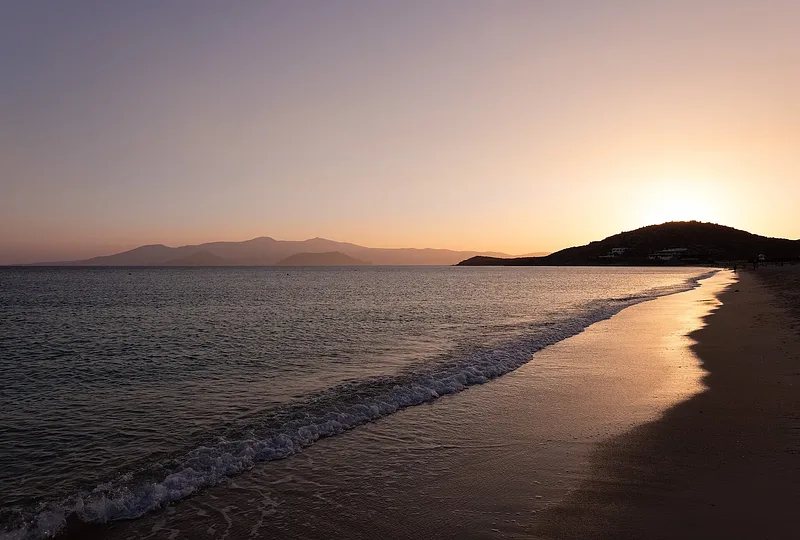
Plaka Beach extends the west-coast strand into a longer, looser landscape. Some sections have organised beds and restaurants; others feel far less built up. This is the base for travellers who want the beach to occupy most of the day and are content with a smaller evening radius.
Naxian on the Beach places couples close to the sand with an adult, design-led tone. Families should instead compare apartments and the exact depth and entry of the beach nearest them. North wind changes conditions along the coast, so no hotel can promise still water every day.
Bus service reaches much of Plaka seasonally, but the beach is long and stop locations matter. A property described as “Plaka” can be well beyond the part with regular restaurants. Ask for walking distances to the nearest market, bus stop and dinner—not simply distance to the sea.
Mikri Vigla: choose it for the wind
Mikri Vigla is divided by a headland, with different exposure on either side. Its wind conditions attract kitesurfers and windsurfers, while the more protected water can suit swimming when conditions align. This is a purposeful base: enthusiasts appreciate being near a centre and reading the wind from the terrace.
For a general first trip, it is less flexible than Agios Prokopios or Plaka. A car is useful, evening choice is limited and wind that delights a rider can frustrate someone who only wants a calm swim. Families should choose accommodation and beach side carefully rather than booking the place name as a guarantee.
Stelida: villas and quick access, but no village centre
Stelida occupies the headland between Chora and Agios Prokopios. Villas and boutique hotels use the views and relative quiet, while the airport, town and beach remain close by road. It works well for groups wanting private space and couples happy to drive to dinner.
What it generally lacks is a coherent centre to walk around. Roads can be dark and unfriendly to pedestrians, distances are deceptive and a view property may be steep. Treat a rental car as part of the room price unless the hotel confirms a reliable shuttle and a genuinely walkable route.
Chalki and Filoti: an island life not arranged around the beach
Chalki, in the Tragea valley, offers old houses, small shops, distilling history and access to paths connecting churches and olive country. Filoti is a larger, living village at the foot of Mount Zas, with a busy central square and practical services. Evenings can be cooler and meals less tied to the visitor rhythm than on the coast.
These villages suit repeat visitors, hikers and travellers who prefer an apartment or guesthouse to a resort. They do not suit a car-free family expecting a morning and afternoon beach session. Buses serve the main interior corridor, but a hiking day, a remote dinner and luggage are much easier with a vehicle. Parking often sits at the edge of the oldest lanes.
Apiranthos: marble lanes and mountain distance
Apiranthos lies higher and farther from Chora. Marble-paved lanes, small museums and a strong village identity make it more than a lunch stop. Staying overnight lets the day-trip traffic fade and puts the eastern side of the island within reach.
The official village information identifies two principal parking areas, a useful clue: the historic core is for walking. Gradients and polished surfaces require care, and beach travel takes commitment. Choose Apiranthos for atmosphere, mountain air and access to routes towards Moutsouna, not as a clever substitute for coastal accommodation.
Moutsouna and Apollonas: rewarding second bases
Moutsouna on the east coast and Apollonas in the north make the island feel much larger. Moutsouna is reached by a winding descent from the interior; its old emery-loading structures recall Naxos's mining history. Apollonas has a small coastal settlement and access to the unfinished ancient kouros above the village.
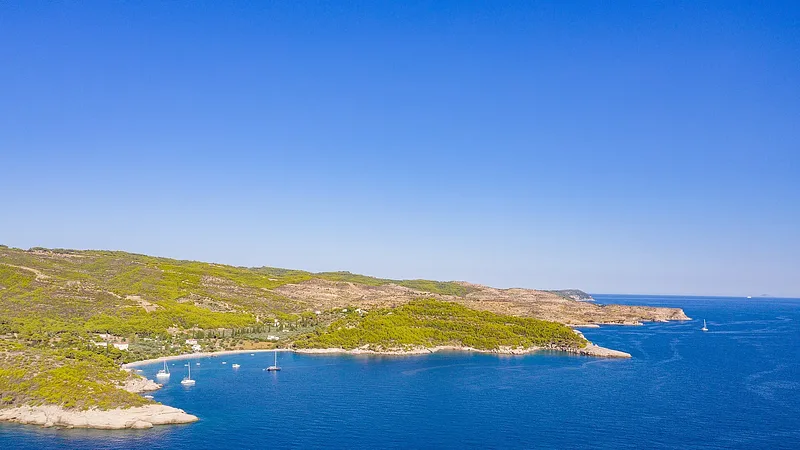
Either can be a special two-night base for a repeat visit or slow road trip. Neither is efficient for someone who wants Chora every evening. Drives are scenic but tiring after dark, services are fewer outside summer and weather affects the east differently from the protected-looking images used to sell it.
Can you do Naxos without a car?
Yes, if you choose the trip the buses support. Chora, Agios Prokopios, Agia Anna and much of Plaka form the most useful summer corridor; the public-bus route continues to Mikri Vigla on selected services. Interior routes connect major villages, but frequency is not equivalent to a city network and changes by season.
A car becomes valuable for trailheads, remote beaches, small archaeological sites and combinations that would require several bus legs. Hire one for two or three days rather than automatically for the whole stay. Confirm insurance for unpaved access and never follow a map onto a rough road simply because other parked vehicles appear at the end.
How to split seven nights
- First visit, balanced: three nights in Chora and four at Agios Prokopios, Agia Anna or Plaka.
- Beach first: five nights in Plaka and two in Chora, placing the town nights around the ferry.
- Walking and food: three nights in Chora, two near Chalki or Filoti and two on the west coast.
- Wind sports: five nights at Mikri Vigla and two in Chora.
With three or four nights, do not split. Choose Chora if evenings and exploration lead; choose Agios Prokopios or Agia Anna if the beach leads. With ten days, an interior or east-coast stay becomes worthwhile. The island's size is an invitation to return, not a challenge to cover every corner before the ferry leaves.